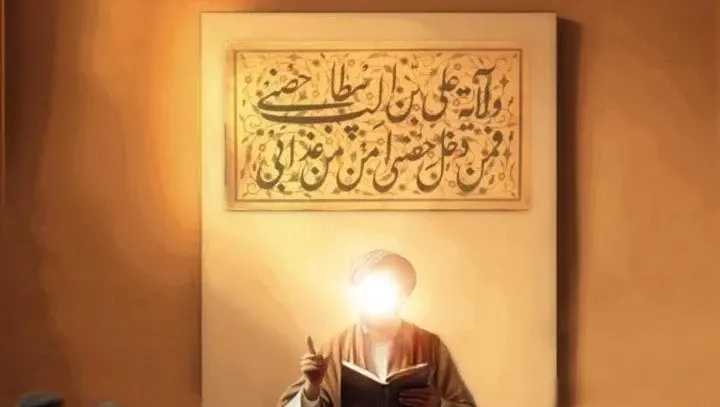
Imam Ali (AS): True Righteousness Begins Within
Imam Ali (AS) teaches that real righteousness is not outward appearance, but the purity of the heart and character hidden from people's eyes.

Imam Ali (AS) teaches that real righteousness is not outward appearance, but the purity of the heart and character hidden from people's eyes.
Use the journey to return to the wisdom repository first, then continue through narration, relevance, reflection, and conclusion.
Reading Progress
0% complete
15 min read
Estimated reading time
Explanation
Start here if you came to understand the meaning and context before moving into the original wording.
Main Explanation
Imam Ali (AS) presents one of the most profound definitions of righteousness in a single sentence. At first glance, this wisdom appears simple, but the deeper we reflect upon it, the more we realize that it addresses one of humanity's greatest spiritual diseases: the obsession with appearances. Human beings naturally care about how they are perceived. We want people to respect us, admire us, praise us, and think positively about us. There is nothing inherently wrong with wanting a good reputation. Islam encourages believers to maintain dignity, cleanliness, and good manners. However, the problem begins when a person becomes more concerned with appearing good than actually becoming good. Imam Ali (AS) warns us against a dangerous illusion: the belief that righteousness can be achieved through outward presentation alone. A person may wear religious clothing, speak softly, quote Quran and hadith, attend religious gatherings, and be praised by society. People may see them as an example of faith and morality. Yet beneath this beautiful appearance may exist arrogance, jealousy, dishonesty, selfishness, pride, hypocrisy, hatred, or hidden sins. This is the core of integrity: alignment. What you are inside must match what you show outside. Not 80% alignment. Not 99%. Complete alignment. The moment there is a gap between private self and public self, integrity breaks. Imam Ali says that kind of outward decoration without inner purity is not righteousness — it is performance. And performance always tires. Always falls. Always gets exposed eventually.
Detailed Explanation
Let us break down what Imam Ali (AS) is actually saying. The word he uses for "adorns himself" implies beautification, decoration, and presentation. It is the act of making oneself look good. And there is nothing wrong with looking good — Islam encourages cleanliness and beauty. The problem arises when adornment is instead of inner reform, not alongside it. Imam Ali identifies a dangerous human tendency: we focus on what others see because others judge what they see. We dress nicely for others. We speak carefully for others. We control our anger in public for others. But alone? Behind closed doors? When no one is watching? That is the real person. The Imam says that if inside you there is something that would disgrace you — meaning if your private thoughts, your hidden habits, your secret sins, your unaddressed ego, your concealed jealousy, your silent arrogance — if any of this exists while you present a polished exterior, then you have not achieved righteousness. You have only achieved deception. This is not a judgment against struggling with inner flaws. Every human struggles. The issue is pretending the struggle does not exist while decorating the outside. Integrity means admitting the gap exists and working to close it. Hypocrisy means decorating the outside precisely to distract from the gap. Imam Ali's deeper lesson: your character is not what you do when people are watching. Your character is what you do when you are certain no one will ever know.
Tafseer
Allah does not judge people by appearances. The Quran repeatedly reminds believers that Allah knows what lies within the hearts. The Quran says : Surah Al-Mulk (67:13) "Whether you conceal your speech or declare it, indeed He is Knowing of that within the breasts." This verse reminds us that no hidden thought remains hidden from Allah. Surah Ghafir (40:19) "He knows the stealthy glance and what the hearts conceal." Even the intentions that never become actions are known to Him. Therefore, decorating the exterior while neglecting the heart provides no benefit before Allah. Imam Ali (AS) calls believers to focus on inner reform before seeking outward praise.
Historical Context
This saying of Imam Ali (AS) comes from the rich tradition of Nahjul Balagha, a collection of his sermons, letters, and sayings compiled by Sharif al-Radi in the 10th century (4th century AH). During Imam Ali's time as Caliph (656-661 CE), he witnessed firsthand the consequences of outward religiosity without inner transformation. After the death of Prophet Muhammad (PBUH), many people maintained the rituals but lost the spirit. Political loyalty masked personal ambition. Public piety hid private corruption. This saying was particularly relevant during the Battle of Siffin and the rise of the Kharijites — people who prayed extensively, recited Quran constantly, but whose hearts had abandoned justice and truth. They looked righteous. They acted righteous in public. But inside, arrogance and self-righteousness consumed them. Imam Ali was teaching his companions: do not be fooled by the decorated exterior. And more importantly, do not let your own exterior fool you. Check what is inside before you decorate what is outside. Scholars like Allama Majlisi and Ibn Abi'l-Hadid have commented extensively on this hikmah, noting that it forms the foundation of Islamic ethics — the unity of inner state and outer action.
Supporting Narration
Quote cardمَنْ أَصْلَحَ سَرِيرَتَهُ أَصْلَحَ اللَّهُ عَلَانِيَتَهُ
جس نے اپنی باطنی حالت کو درست کیا، اللہ اس کی ظاہری حالت کو درست فرما دیتا ہے۔
"Whoever corrects his inner self, Allah corrects his outward state."
Narrator
Imam Ali (AS)
Source
Ghurar al-Hikam
Explanation
Imam Ali (AS) teaches that every lasting change begins with the inner self. Many people try to improve their outward appearance while neglecting their hearts. However, true reform starts with correcting intentions, thoughts, and character. When a person develops sincerity, humility, and taqwa, these qualities naturally appear in their actions. Allah blesses those who work on their hidden character by improving their outward condition as well. This narration emphasizes that the heart is the foundation of all goodness. A strong foundation produces strong character. Instead of focusing on impressing people, believers should focus on pleasing Allah. The outside becomes beautiful when the inside is purified. This is the path of true integrity.
Supporting Narration
Quote cardإِنَّ اللَّهَ لَا يَنْظُرُ إِلَى صُوَرِكُمْ وَلَا إِلَى أَجْسَادِكُمْ وَلَكِنْ يَنْظُرُ إِلَى قُلُوبِكُمْ وَأَعْمَالِكُمْ
Why This Matters Today
Social Media and the Curated Self
Every day, millions of people post their best moments, their happiest photos, their most inspiring quotes. The outside is decorated perfectly. But inside? Anxiety, loneliness, jealousy, insecurity, and comparison rage silently. Imam Ali's words are a direct diagnosis of the social media generation: righteousness is not that you appear good online while inside is what disgraces you.
Workplace Hypocrisy
People smile at bosses, agree in meetings, and say "team player" words — then complain privately, sabotage quietly, and compete ruthlessly. This gap between public professional self and private real self destroys organizations from within.
Influencer Culture
Young people see fame and admiration as the goal. Get followers. Get likes. Get validation. Imam Ali says: that is not success. That is decoration. The disgrace inside — the emptiness, the desperation for approval — is hidden behind a beautiful feed.
Cancel Culture and Fear
Many people behave "correctly" only because they fear being canceled, exposed, or shamed. Their public virtue is fear-based performance, not inner conviction. Imam Ali would say: that is not righteousness. That is survival instinct dressed as morality.

Youth Relevance
Youth is the most authentic-seeking generation — and simultaneously the most performative. The paradox is real. You want to "be yourself" but also curate a perfect online identity. You reject fake people but spend hours crafting your own digital image. Imam Ali speaks directly to this tension. For young adults, integrity is tested daily: 1. Do you study when no one is checking? 2. Do you keep your word to friends when a better offer appears? 3. Do you lower your gaze on your phone when no one would ever know? 4. Do you tip fairly when the worker won't remember you? 5. Do you return the extra change the cashier gave by mistake? These small private moments define your character more than any Instagram post ever will. Youth today suffer from "imposter syndrome" precisely because of the integrity gap. You feel like a fraud because, somewhere inside, you know your public self and private self don't match. The cure is not better performance. The cure is inner alignment — exactly what Imam Ali prescribes.
Reflection Questions
Question 1
1. Is there anything in my private life that would disgrace me if publicly revealed? Not asking you to share. Just asking you to be honest with yourself.
Question 2
2. When was the last time I acted differently in private than I would in front of my parents, teacher, or friends? What was the gap? Why did it exist?
Question 3
3. Do I do good deeds only when others can see them? Try to remember your last five good acts. How many were witnessed?
Question 4
4.If a hidden camera recorded my thoughts for one day, would I recognize the person on the recording? This is the real test of integrity.
Question 5
5.Am I more focused on how I appear or on who I am becoming?
Summary & Key Takeaways
Principle Lesson Integrity defined Alignment between private self and public self Hypocrisy exposed Outward decoration without inner purity is not righteousness True test What you do when no one is watching Priority Fix the inside first; outside follows automatically Modern relevance Social media, workplace, and influencer culture amplify the integrity gap Student application Studying without supervision, cheating, group work honesty Daily practice Mirror test, hidden good deeds, silent accountability Goal Not perfection — but closing the gap, one day at a time
Closing Reflection
Final thought
O Allah, You who knows the secret and the hidden, You who sees what no eye can see — grant me the courage to stop decorating my flaws and start healing them. Save me from the exhaustion of performance. Give me the integrity that Imam Ali lived — where my private self and public self are one, not because I am perfect, but because I am honest. Ameen.
اللہ تمہاری شکلوں اور جسموں کو نہیں دیکھتا بلکہ تمہارے دلوں اور اعمال کو دیکھتا ہے۔
"Allah does not look at your appearance or your bodies; rather He looks at your hearts and your deeds."
Narrator
Prophet Muhammad (PBUH)
Source
Sahih Muslim
Explanation
The Prophet Muhammad (PBUH) explained that his mission was to perfect noble character. This shows that Islam is not only about rituals and religious practices but also about transforming the heart and behavior. Good character reflects genuine faith and sincerity. A person who develops honesty, humility, patience, and compassion is fulfilling the purpose of Islam. The Prophet's teachings aimed to create people whose inner and outer selves were aligned. Imam Ali's wisdom supports this goal by warning against outward righteousness without inner purity. Noble character begins with a pure heart. Every act of worship should lead to moral improvement. The success of a believer is measured by their character. This is the essence of true righteousness.
Supporting Narration
Quote cardلَا تَنْظُرْ إِلَى طُولِ رُكُوعِهِ وَسُجُودِهِ فَإِنَّ ذَلِكَ شَيْءٌ اعْتَادَهُ فَلَوْ تَرَكَهُ اسْتَوْحَشَ لِذَلِكَ وَلَكِنِ انْظُرْ إِلَى صِدْقِ حَدِيثِهِ وَأَدَاءِ أَمَانَتِهِ
اس کے لمبے رکوع اور سجدوں کو نہ دیکھو، کیونکہ یہ ایک عادت ہے جسے چھوڑ دے تو بے چینی محسوس کرے گا، بلکہ اس کی سچی بات اور امانت کی ادائیگی کو دیکھو
"Do not look at the length of his bowing and prostrating, for that is something he has become accustomed to — if he left it, he would feel uneasy. Rather, look at the truthfulness of his speech and the fulfillment of his trust."
Narrator
Imam Ja'far al-Sadiq (AS)
Source
Al-Kafi, Volume 2, Book of Faith and Disbelief (Hadith 16)
Explanation
Imam Ja'far al-Sadiq (AS) warns against judging people solely by visible acts of worship. Long prayers and frequent religious activities may look impressive, but they do not always reflect true character. The real test of faith is honesty, trustworthiness, and sincerity. A person's dealings with others reveal the condition of their heart. Someone who prays regularly but lies and deceives people has not fully benefited from worship. Islam teaches that worship should improve character and morals. Truthfulness and fulfilling trusts are signs of genuine faith. This narration complements Imam Ali's wisdom by emphasizing inner qualities over outward displays. Righteousness is proven through actions and character. True believers are recognized by their integrity.
Student Relevance
Studying Without Supervision The ultimate integrity test for a student: when the teacher leaves the room, do you keep working? When the exam is open-book and the instructor says "no internet" but can't see your screen, do you resist the tab? When homework is optional, do you do it anyway? Imam Ali says your character is what you do when no authority is watching. Every unsupervised study session is a character workout. Group Projects In group work, integrity means pulling your weight even when others are lazy. It means giving credit fairly. It means not hiding your mistakes. The student who does the minimum visible work but lets others carry the load — that is the decorated exterior with disgrace inside. Cheating and Shortcuts Cheating is the purest violation of this wisdom. The cheater gets the grade (outward decoration) but inside carries the knowledge that they didn't earn it. That inner disgrace is heavier than any failed exam. Imam Ali teaches: better an honest low grade than a decorated high grade built on dishonesty. Time Management When you procrastinate and then pretend you worked hard — you are decorating laziness as busyness. Integrity means admitting: "I wasted time today." And then fixing it.
Practical Response
Daily Habits 1. The Mirror Test — Every morning, look in the mirror and ask: "If everything I did yesterday was broadcast publicly, would I be ashamed?" If yes, address that today. 2. Private Journaling — Write down one moment from the previous day when you acted differently in private than you would in public. Identify the gap. 3. One Hidden Act — Do one good deed daily that no one will ever know about. Not even social media. This trains inner integrity. 4. Silent Accountability — Before sleeping, ask: "What did I do today when no one was watching?" No judgment. Just awareness. Weekly Habits 1. Integrity Audit — Every Friday, review your week. List 3 moments of alignment (private matched public) and 3 moments of gap. 2. Confession to Self — Write down one hypocrisy from the week. Then write: "Next time I will..." Be specific. 3. No-Decoration Day — One day per week, do not post on social media. Do not dress to impress. Do not perform for anyone. Just be. Observe how it feels. Remove 1. Posting for validation before doing the actual work 2. Saying "I'll do it" when you know you won't 3. Acting differently around different people to please them 4. Taking credit for work you didn't do 5. Hiding mistakes to look competent Add 1. Private commitments kept (even small ones: making your bed, returning a call) 2. Speaking the same about someone behind their back as you do to their face 3. Doing work in private exactly as you would in front of a boss 4. Admitting "I don't know" instead of pretending 5. Apologizing when no one would have caught you
Action Steps
7-Day Integrity Challenge
Day 1: The Honest Hour
For one hour today, do not perform for anyone. Don't smile to please. Don't agree to avoid conflict. Don't exaggerate to impress. Just be exactly who you are. Notice the discomfort.
Day 2: Return One Hidden Thing
Think of something small you took or benefited from unfairly that no one knows about. Return it. Or donate its value. No announcement. Just do it.
Day 3: Private Work, Public Standard
Pick one task today (study, chores, work). Do it in private exactly as you would if your teacher/boss was watching. Same speed. Same quality. Same focus.
Day 4: Say the Hard Thing
Find a situation where you normally say what people want to hear. Instead, say the truth gently but clearly. Practice integrity in speech.
Day 5: No Social Media Posting
Complete 24 hours with zero posting. Observe how often you reach for your phone to perform. Write down what you notice.
Day 6: One Hidden Good Deed
Do something genuinely helpful for someone. Ensure absolutely no one knows it was you. Not even them if possible.
Day 7: Integrity Confession (Private)
Write a letter to yourself listing every gap you identified this week between your private self and public self. Then write: "Starting today, I will close one gap: ______" Be specific.
Personal Reflection
Journal space
Today I commit to this one truth: I am not defined by what people see. I am defined by what Allah sees when no one else is looking. I have spent too much energy decorating the outside while neglecting the inside. I have worried about my image more than my reality. I have performed righteousness instead of becoming righteous. From today, I will check my intentions before my appearance. I will fix my private self and trust that the public self will follow. I will do good even when no one applauds — because Someone is always watching. This is the path of Imam Ali. And I choose it.
Interactive Reflection
0/15 steps completeGuided Question
1. Is there anything in my private life that would disgrace me if publicly revealed? Not asking you to share. Just asking you to be honest with yourself.